Research
Current Research — Biomedical AI Research Lab, UCLA (Sep 2023–Present)
Co-advised by Prof. William Speier and Prof. Vwani Roychowdhury.
No-Reflow Prediction from Stroke Angiography

Developed the first ML framework to predict post-EVT no-reflow immediately after reperfusion by modeling temporal perfusion dynamics from intra-procedural DSA videos and clinical variables. The model achieves AUROC 0.933 and significantly outperforms clinical baselines, enabling real-time risk stratification during stroke intervention.
Manuscript in revision at IEEE Transactions on Medical Imaging.
Multimodal Thyroid Cancer Diagnosis

Built an Attention Multiple Instance Learning framework that fuses ultrasound imaging and genomic features to risk-stratify indeterminate thyroid nodules. The approach advances interpretable AI for precision oncology by integrating complementary diagnostic modalities.
Published in Thyroid (2025). See also: ThyGraph (MICCAI 2024) — a graph-based approach from the same project.
Ultrasound Enhancement

Developed an image enhancement model using CycleGAN and perceptual loss to improve ultrasound image quality across disease domains. Ranked top 10 in the MICCAI USEnhance Challenge 2023. Demonstrates expertise in unpaired image translation and generative modeling applied to clinical imaging.
Published in JMIR Biomedical Engineering (2024).
Past Research — Visual Machines Group, UCLA (Sep 2020–May 2023)
Advised by Prof. Achuta Kadambi.
Physiological Signal Estimation & Fair Sensing
Built a graphics-based rPPG pipeline for heart rate estimation from facial images and designed spatio-temporal correction algorithms for infrared thermometry to improve accuracy and fairness in non-contact body temperature measurement across skin tones.
Representation Learning & Minority Inclusion (MIME)
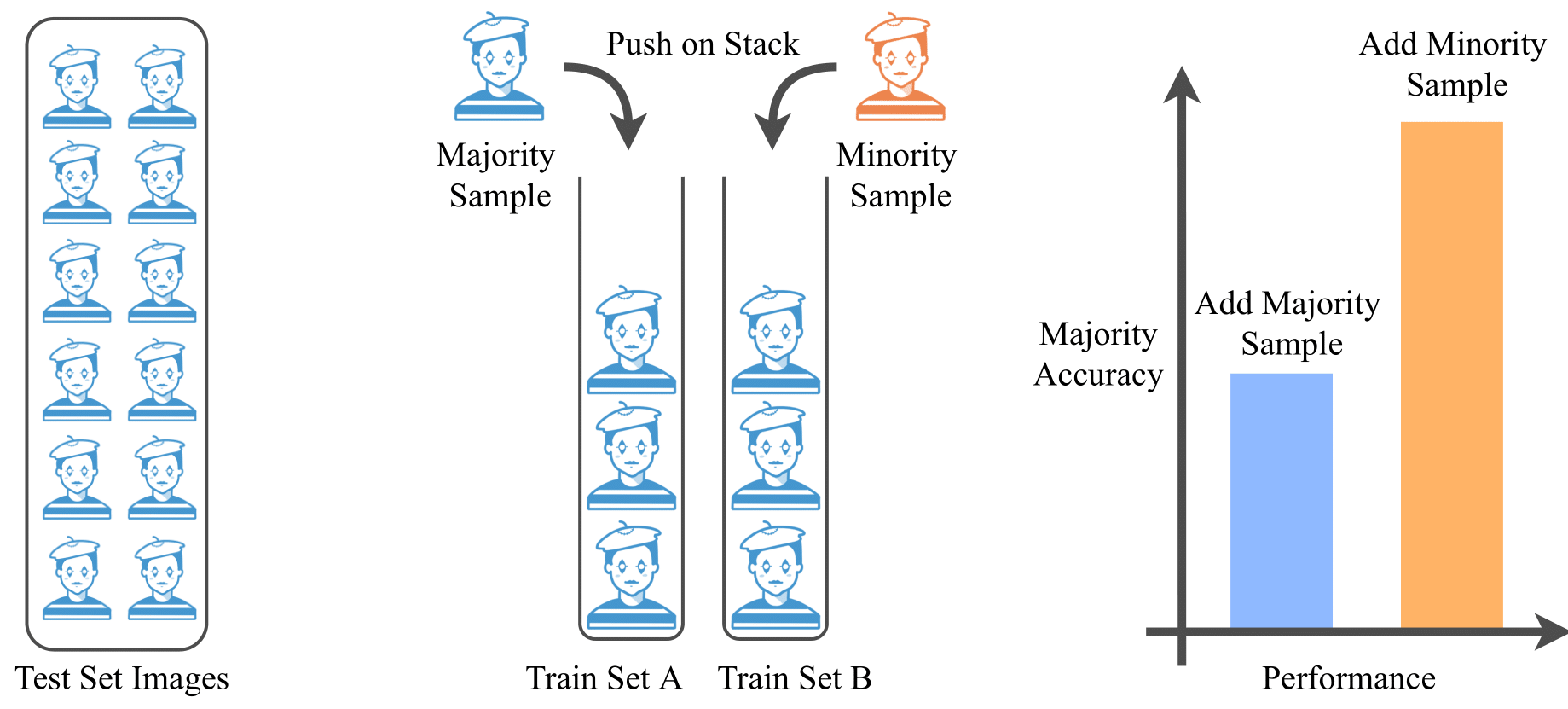
Enhanced minority class recognition via the MIME (Minority Inclusion for Majority group Enhancement) effect: showing that including a small number of minority samples during training measurably improves test error for the majority group. Also improved object tracking under occlusion using visual physics-based inductive biases.
Published at ECCV 2022.